Our
Client
Royal Canadian Mounted Police (RCMP)
Industries
Awareness Campaign
Law Enforcement
Public Safety
Government
Link
App only
Services
Communication Strategy
Campaign Creative
Web App Design & Development
Content Strategy
Out-of-Home & Transit Advertising, Social Media Strategy
Brand Voice
Copywriting
When awareness isn’t enough, the strategy has to go further.
The RCMP came to Studiothink with a challenge that went beyond visibility. Human trafficking is happening in plain sight, in hotels, restaurants, rideshares, and malls, and the people best positioned to recognize it were being trained in ways that weren’t working.
Studiothink was engaged to develop a communication strategy and creative platform built not just to inform, but to change behaviour and drive reporting.
The problem
Traditional awareness training assumes something frontline workers rarely have: uninterrupted time and full attention. A video shown once in a staff meeting gets watched, forgotten, and never referenced again. The indicators go unrecognized. The hesitation to report remains. And traffickers count on exactly that gap between what people are told and what they actually retain.
The RCMP understood the scale of the problem. What they needed was a strategy that met people where they actually were, in motion, on their phones, moving between tasks, uncertain about what they were seeing and whether it was their place to say something. Passive consumption of information was not going to move the needle on reporting.
The existing approach also didn’t account for the public. Frontline workers are one layer of visibility. Everyday people in shared spaces are another, and they had no accessible, low-pressure tool to report what they suspected without fear of overreacting or getting it wrong.
The solution
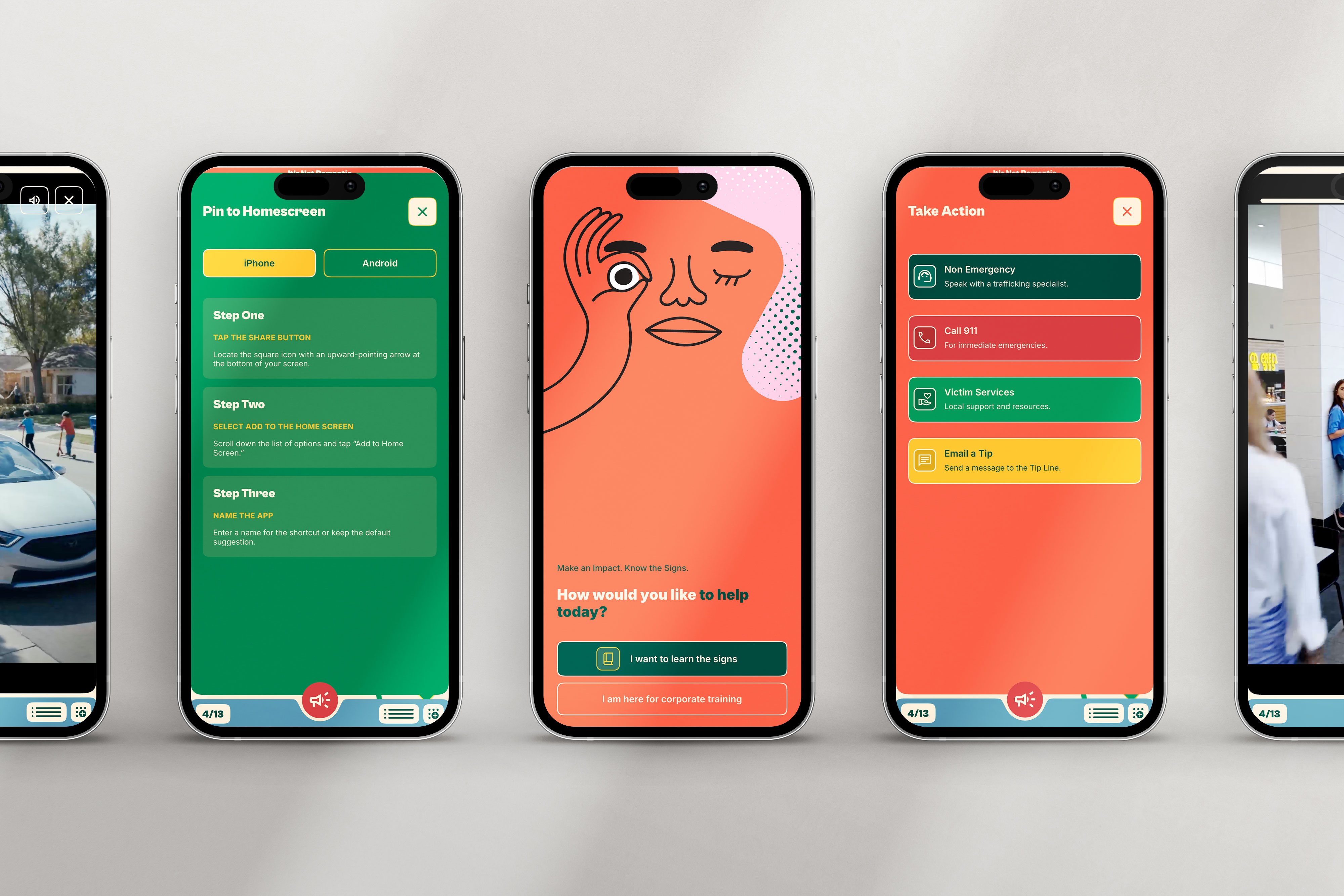
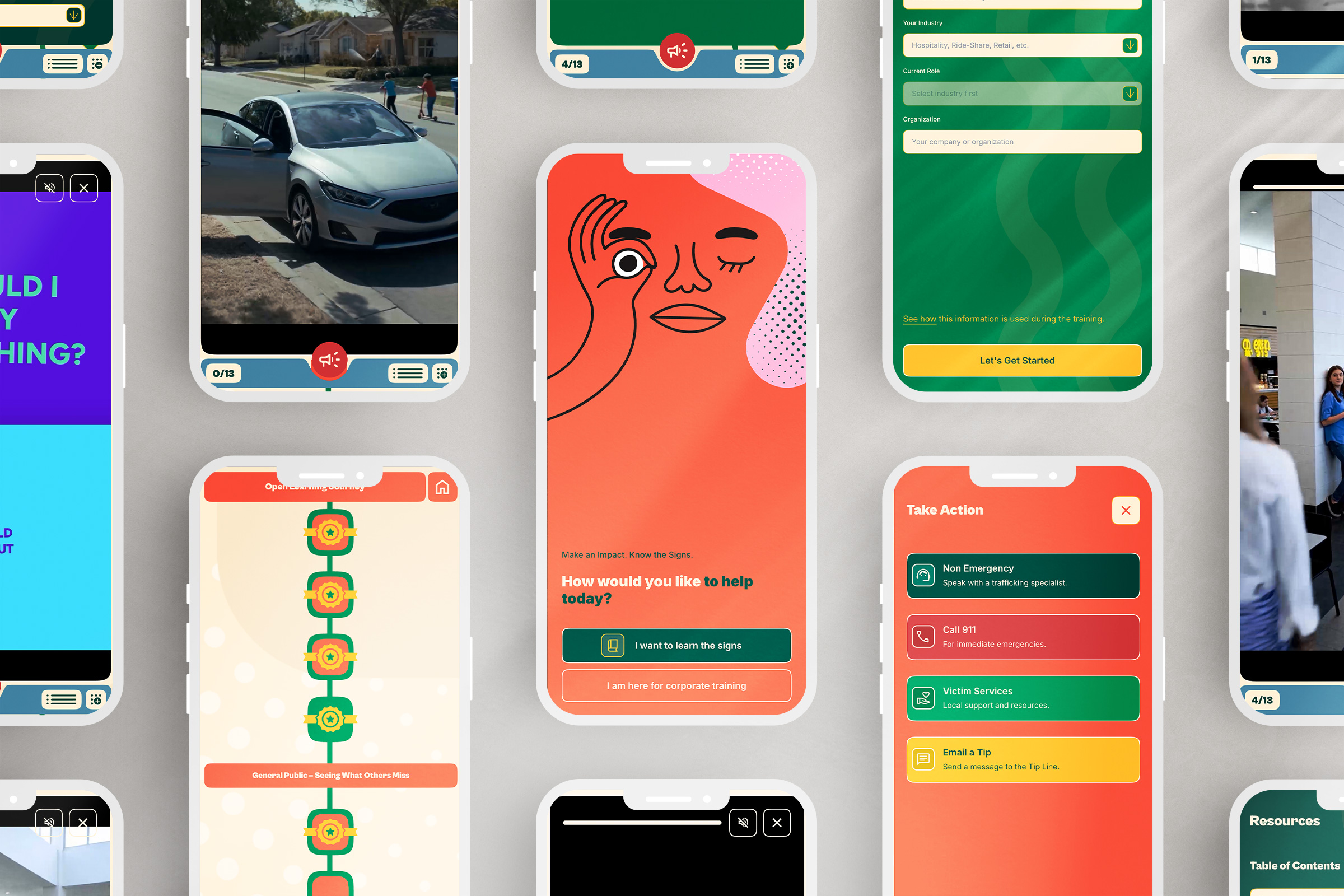
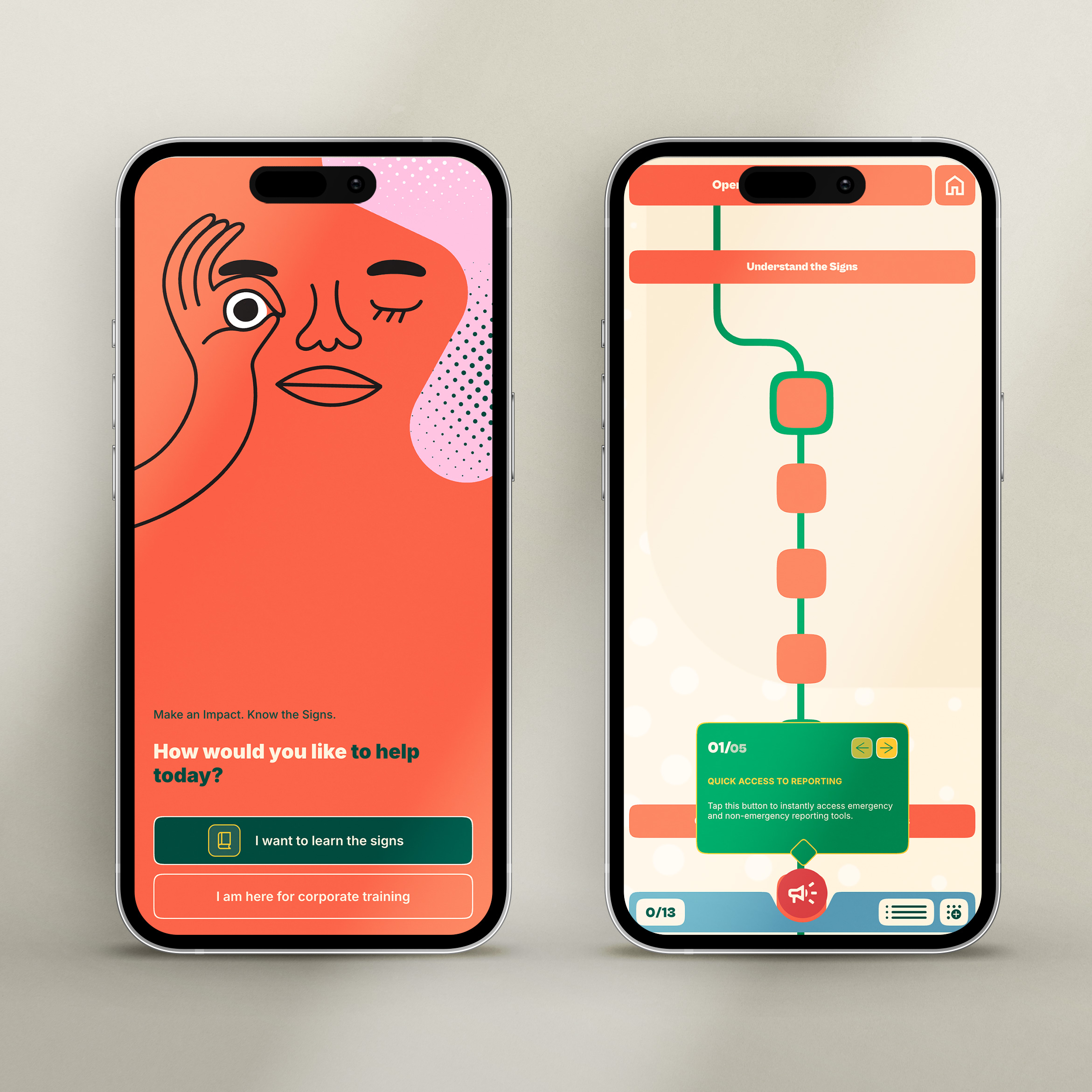
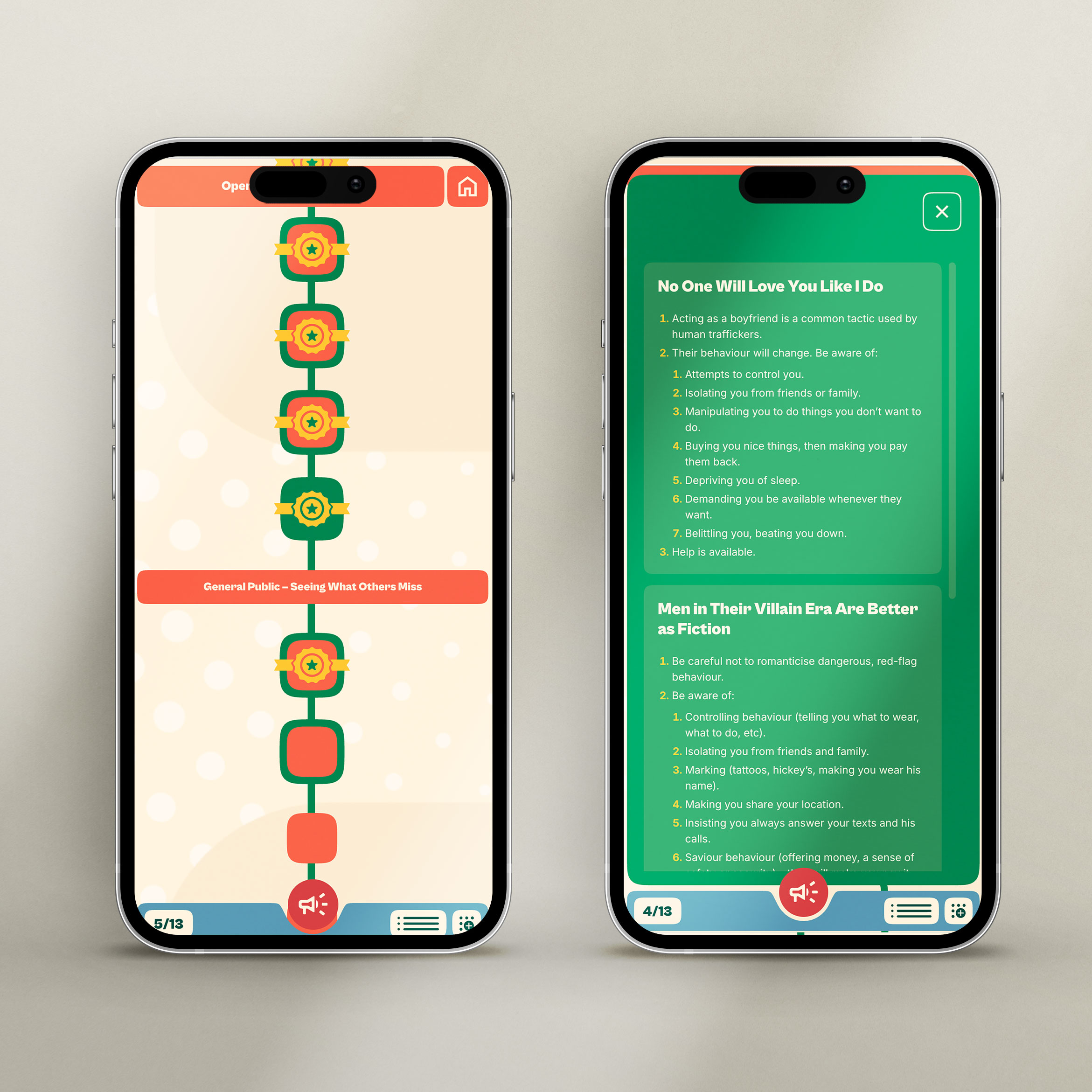
Studiothink developed a comprehensive communication strategy anchored by a custom web app designed from the ground up to fit the reality of how frontline workers and the public actually behave. Inspired by the familiar interfaces of TikTok and Duolingo, the app delivers microlearning through short-form videos in a fast-paced, intuitive format that reduces intimidation and dramatically improves retention.
Users move through a predefined training journey, earn certification, and can return to the app at any point to review what they’ve learned or report what they’re seeing. The reporting button is always present, regardless of where a user is in their training.
The campaign creative launched alongside the app with equal conviction. The “I Dare You to See” platform was designed to cut through in transit environments, on social media, and in the physical spaces where trafficking is most likely to occur. Bold, human, and impossible to ignore, the creative made the invisible visible without sensationalizing the issue.
Printed materials placed in bathrooms and hotels, hotel staff awareness pins, and bumper stickers for drivers extended the campaign’s reach into the everyday moments where recognition and reporting matter most.
The result is a system built not for one day of training, but for the long term. One that can grow, be updated, and serve both frontline workers and the general public simultaneously, giving people the knowledge to recognize human trafficking and the confidence to act on what they see.